Turn Questions Into Operational Insight: Improving Pharmacy Operational Consistency
As artificial intelligence becomes more common across healthcare operations, many pharmacy leaders are evaluating where AI can provide practical value. While much of the discussion around AI focuses on automation and efficiency, some of the most meaningful opportunities may come from something much simpler: understanding the questions pharmacy teams ask every day.
Pharmacy teams regularly seek guidance on procedures, documentation requirements, compliance expectations, and operational workflows. Traditionally, those questions are answered individually and then forgotten. However, when viewed collectively, they can provide valuable insight into how an organization operates.
This is where Pharmacy AI can offer a different kind of benefit. Rather than simply helping users find answers faster, Pharmacy AI can help organizations identify patterns in recurring questions, uncover opportunities for process improvement, and support more consistent operations across teams and locations.
The Hidden Value of Operational Questions
Every question asked by a team member tells a story. A question about documentation may indicate uncertainty around recordkeeping requirements. A question about a workflow may suggest that a procedure is difficult to follow. A question that repeatedly appears across multiple users may reveal a larger organizational challenge.
When these questions are analyzed collectively, they can help pharmacy leaders better understand:
- Where employees need additional support
- Which workflows generate confusion
- How effectively procedures are being communicated
- Whether documentation is providing sufficient guidance
- Where operational variation exists across teams
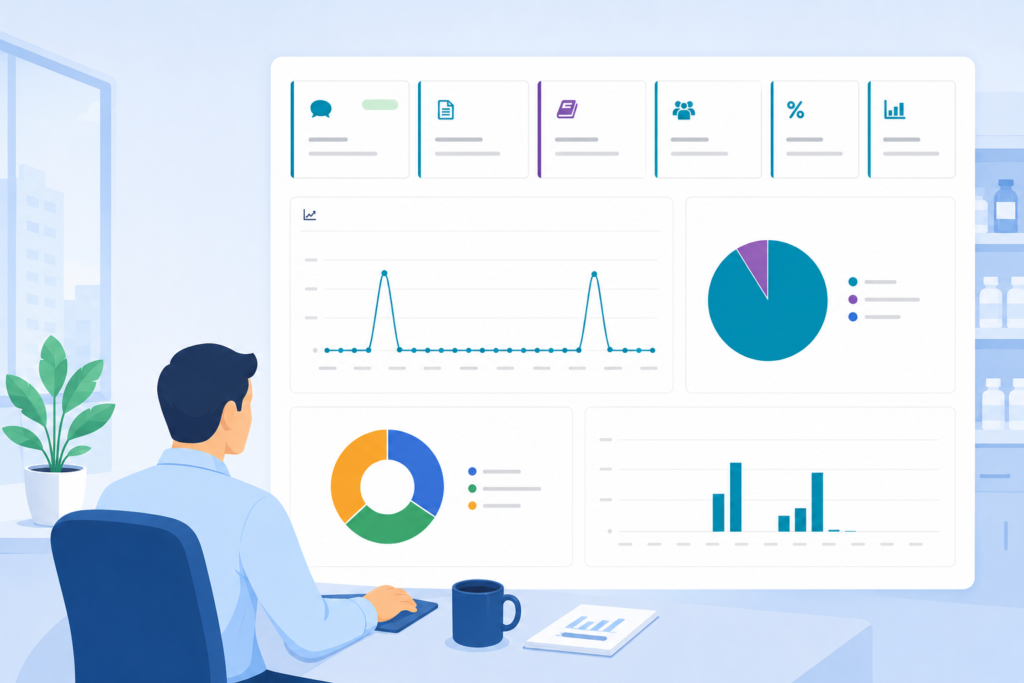
Instead of viewing questions as isolated events, organizations can use Pharmacy AI to transform routine inquiries into actionable operational intelligence.
How Pharmacy AI Supports Operational Consistency
Operational consistency is a critical goal for pharmacies of all sizes. Whether an organization operates a single site or multiple locations, consistent execution of policies, procedures, and documentation practices helps support quality, efficiency, and compliance efforts. However, maintaining consistency can be challenging when teams rely on institutional knowledge, informal communication, or outdated documentation. By analyzing recurring questions and usage trends, Pharmacy AI can help organizations identify opportunities to strengthen standardization efforts.
Identify SOPs That Need Clarification
Standard operating procedures are designed to establish consistent expectations across the organization. Yet even well-developed SOPs can become sources of confusion if:
- Procedures evolve over time
- Regulatory expectations change
- Documentation becomes difficult to navigate
- Instructions lack sufficient detail
If employees repeatedly ask questions about the same procedure, that may indicate an opportunity to review and improve the underlying documentation. Pharmacy AI can help surface these recurring themes, enabling leaders to focus improvement efforts where they are most needed.
Detect Frequently Misunderstood Workflows
Some workflows naturally generate more questions than others. Common examples may include:
- Sterile compounding activities
- Environmental monitoring processes
- Documentation requirements
- Competency management procedures
- Quality assurance workflows
When Pharmacy AI identifies recurring questions around specific processes, organizations gain visibility into areas where additional clarification or process refinement may be beneficial. This can help teams move from reactive problem-solving to proactive operational improvement.
Supporting More Effective Training Programs
One of the most valuable applications of Pharmacy AI is identifying knowledge gaps that may otherwise go unnoticed. Traditional training assessments often rely on audits, annual reviews, or manager observations. While these approaches remain important, they may not always capture the challenges employees experience during day-to-day work. Recurring questions provide a more immediate signal.
When teams consistently ask about a particular topic, leaders gain insight into where additional education may be helpful. These insights can support:
- Improved onboarding programs
- Refresher training initiatives
- Competency development efforts
- Documentation education
- Workflow-specific learning opportunities
As organizations grow, this visibility becomes increasingly important for maintaining consistent training experiences across departments and locations.
Strengthening Documentation Quality
Documentation is foundational to pharmacy operations. Policies, procedures, forms, and supporting records help establish expectations and demonstrate compliance activities. However, documentation is only effective when employees can easily understand and apply it. Recurring questions often reveal opportunities to improve documentation quality. For example, Pharmacy AI may help identify:
- Procedures that require clarification
- Missing workflow details
- Inconsistent terminology
- Documentation processes that generate confusion
- Areas where additional guidance may be beneficial
Addressing these opportunities can improve usability while helping teams work more confidently and consistently.
Pharmacy AI and Inspection Readiness
Inspection readiness is not simply about preparing for an upcoming survey or audit. It is the result of maintaining strong operational practices over time. Organizations that regularly evaluate workflow challenges, documentation quality, and training effectiveness are often better positioned when inspections occur. Pharmacy AI can contribute to inspection readiness by helping organizations:
- Recognize recurring compliance questions
- Identify process vulnerabilities early
- Improve SOP clarity
- Support documentation consistency
- Strengthen employee preparedness
By understanding where confusion exists before an inspection occurs, pharmacy leaders can address issues proactively rather than reactively.
From Answers to Operational Intelligence
The next generation of Pharmacy AI extends beyond search functionality. Finding information quickly is important, but understanding how that information is being used may be even more valuable. Operational insights generated through question trends and usage patterns can help organizations make informed decisions about:
- Documentation updates
- Workflow improvements
- Training priorities
- Standardization initiatives
- Compliance program enhancements
This transforms Pharmacy AI from a simple information tool into a resource that can help support continuous operational improvement.
How Pestle Intelligence Uses Pharmacy AI
The Pestle AI Compliance Assistant is designed to help pharmacy teams quickly access compliance-related information and operational guidance. Beyond helping users locate answers, organizations can review common usage trends and recurring workflow questions to better understand where additional clarity, training, or documentation support may be needed.
These insights can help identify:
- SOPs that may require updates or clarification
- Frequently misunderstood workflows
- Knowledge gaps across teams or locations
- Opportunities to improve operational consistency
- Areas where additional employee training may be beneficial
As part of the broader Pestle Intelligence initiative, the AI Compliance Assistant represents an important step toward practical Pharmacy AI solutions built specifically for pharmacy operations.
Building More Consistent Pharmacy Operations
Questions are often viewed as interruptions to work. In reality, they can be valuable indicators of how an organization functions. When pharmacy leaders leverage Pharmacy AI to understand recurring questions and workflow trends, they gain visibility into opportunities that might otherwise remain hidden.
The result is a more proactive approach to operational consistency, documentation quality, employee training, and inspection readiness. As Pharmacy AI continues to evolve, organizations that use these insights effectively will be better positioned to support standardization, improve compliance operations, and create more resilient pharmacy workflows.