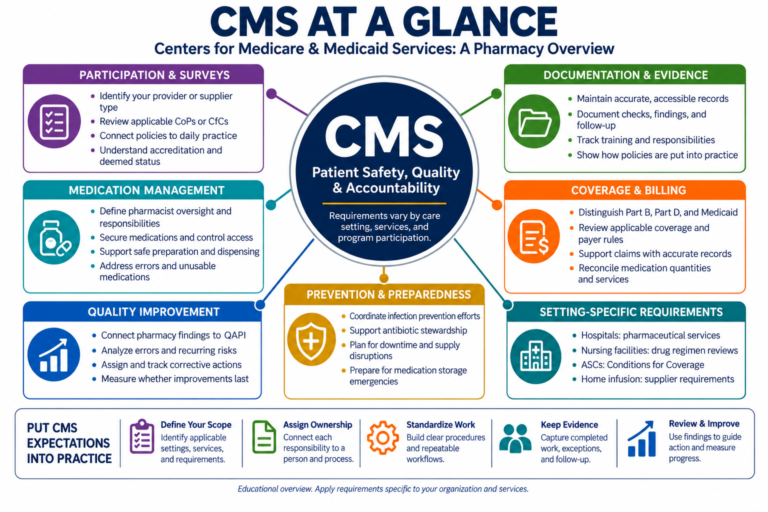
CMS Pharmacy Requirements: A Guide for Pharmacy Leaders
CMS pharmacy requirements influence medication safety, documentation, quality improvement, and billing. Learn how expectations differ by care setting.
Search results
21 matches found.
CMS pharmacy requirements influence medication safety, documentation, quality improvement, and billing. Learn how expectations differ by care setting.
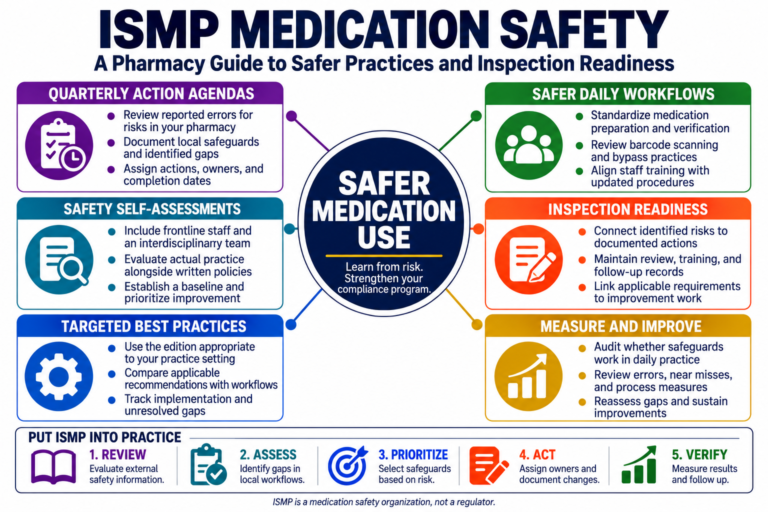
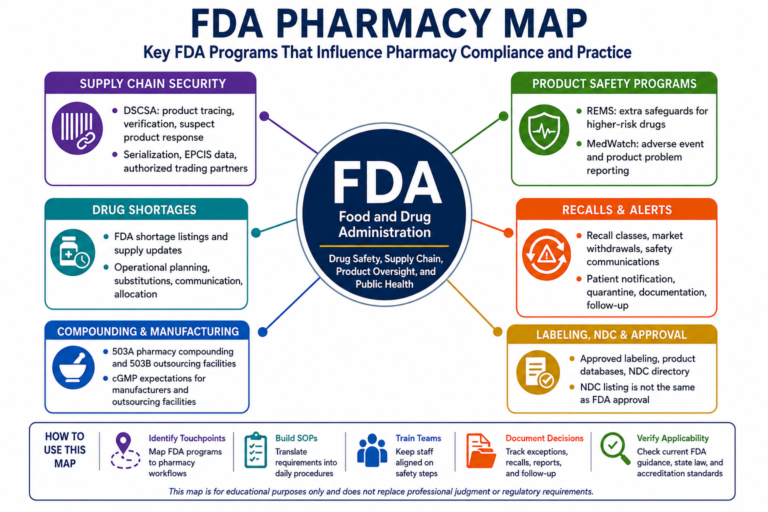
Strengthen your compliance program with ISMP medication safety resources, quarterly Action Agendas, self-assessments, and targeted best practices.
Drug recalls for pharmacies require fast identification, quarantine, patient review, communication, reconciliation, and documented closure.
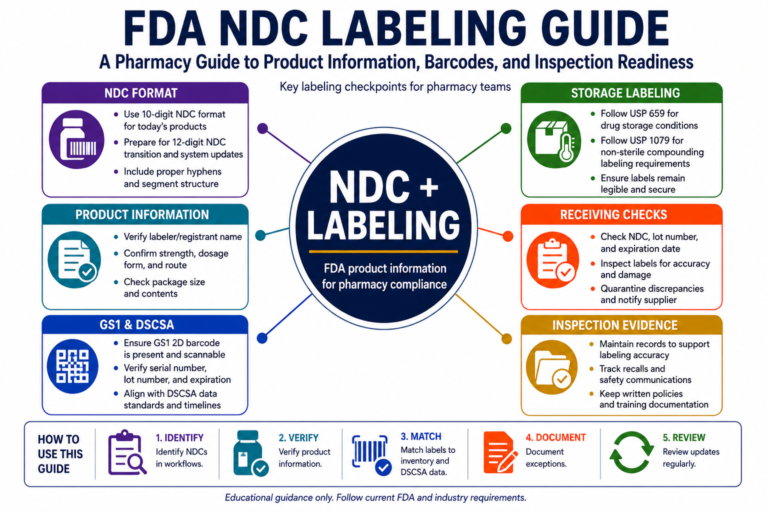
Learn NDC labeling requirements, the FDA’s 12-digit transition, GS1 barcode connections, and how pharmacies can prepare product data for inspections.
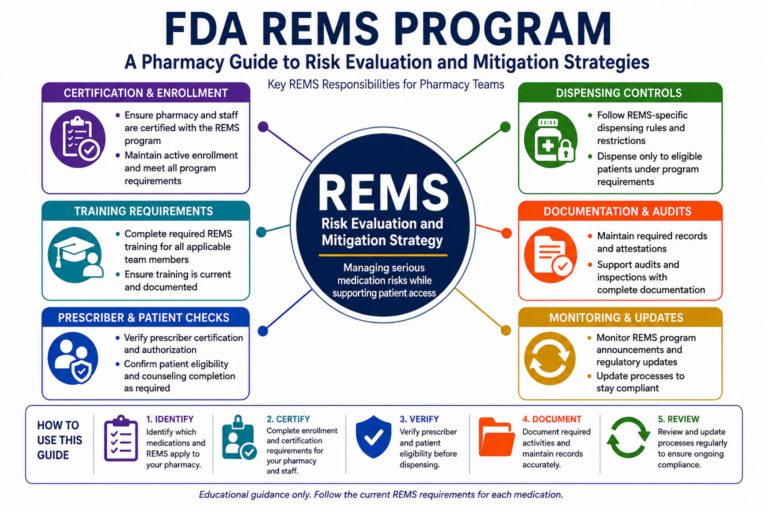
Learn how the FDA REMS program affects pharmacy certification, dispensing checks, training, documentation, audits, and patient access.
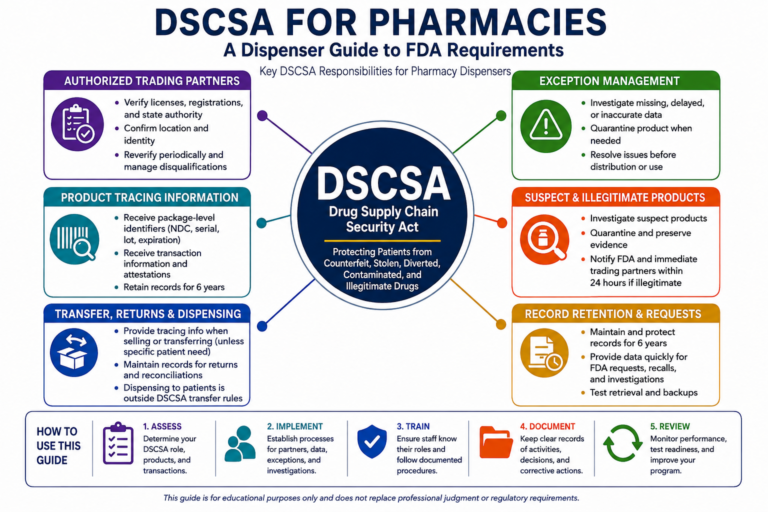
DSCSA requires dispensers to trace covered prescription drugs, verify trading partners, retain records, and respond to suspect products.
Understand FDA pharmacy regulations, including DSCSA, REMS, recalls, drug safety, shortages, compounding, and product oversight.
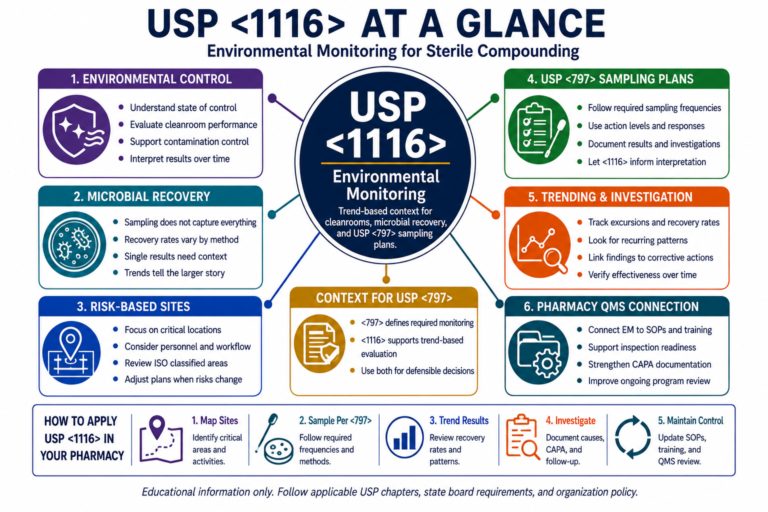
USP 1116 environmental monitoring helps pharmacies interpret USP 797 sampling plans, trends, recovery rates, investigations, and microbial control.
USP 1121 nomenclature can help pharmacies standardize names, reduce confusion, and strengthen master formulation records for compounded preparations.
Learn how USP 1163 helps pharmacies build quality assurance programs that support USP 795, 797, 800, and 825 compounding operations.